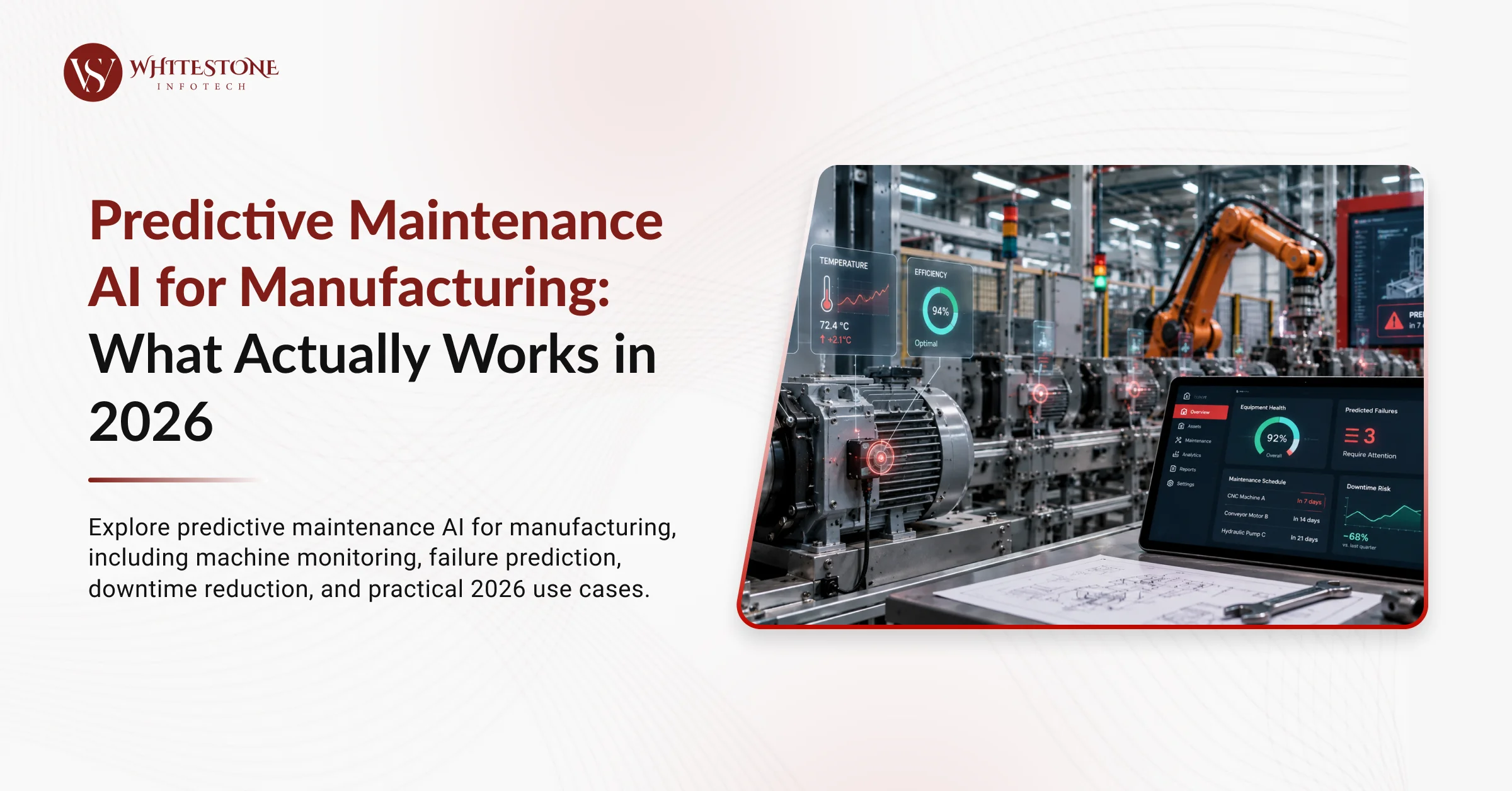

A UK specialty chemicals manufacturer we spoke to last quarter had bought a PdM platform at £180k annual licence expecting it would eliminate scheduled maintenance across their entire plant. Eighteen months into deployment, the platform was delivering measurable value on 40 rotating equipment items (motors, pumps, compressors) where they had installed wireless vibration and temperature sensors. On the remaining 320 assets across the plant (static equipment, older equipment without sensors, batch reactors with process instrumentation but no dedicated PdM sensors), the platform was generating alerts of limited practical value.
The maintenance manager showed us the alert history. On the 40 well-instrumented assets: 87 percent of alerts corresponded to real issues found on inspection, and the team had caught 8 significant impending failures that would have caused production stops. On the 320 under-instrumented assets: 34 percent of alerts corresponded to real issues, meaning 66 percent were false positives that maintenance had to investigate and dismiss. The maintenance team had started ignoring alerts on the under-instrumented assets, which is exactly the failure mode PdM vendors warn about but rarely address in scoping conversations.
The honest conversation with the vendor's implementation partner had been avoided during scoping. They had sold the platform on total asset coverage. What actually worked was PdM on the well-instrumented rotating equipment subset. The rest was demo theatre wrapped in vendor pricing.
We recommended shrinking the PdM programme to the 40 well-instrumented assets plus 60 additional rotating equipment items where the sensor investment would pay back quickly, dropping the 260 under-instrumented static assets from active PdM monitoring, and reallocating the sensor investment budget to condition-based monitoring on the additional 60 rotating items. Annual platform cost stayed at £180k but the addressable ROI increased significantly.
That is the predictive maintenance ai manufacturing conversation across UK and US mid-market manufacturers in 2026. PdM AI delivers real value on well-instrumented rotating equipment with meaningful failure history. It remains demo theatre on under-instrumented assets, new equipment without failure history, and asset types where run-to-failure is economically rational. Scope discipline matters more than vendor selection.
This article is a candid guide for UK and US mid-market manufacturing operations, maintenance, and IT leaders scoping predictive maintenance AI investment. What ships in production. Where it remains demo theatre. Real tool tiers with costs. Realistic ROI expectations. Which equipment types actually benefit. How to avoid the total-asset-coverage trap.
What Predictive Maintenance AI Ships in Production
Five categories where predictive maintenance AI genuinely delivers value in 2026.
Vibration analysis on rotating equipment. ML models on vibration signatures from wireless or wired accelerometers detect bearing wear, misalignment, imbalance, and lubrication issues on motors, pumps, compressors, fans, and mixers. Most mature PdM category with strong ML models trained on decades of vibration data. Delivers 20-40 percent unplanned downtime reduction on covered assets.
Temperature trending with baseline deviation detection. ML models track temperature patterns on electrical assets, mechanical assets, and process equipment, alerting on deviations from established baselines. Effective on switchgear, transformers, motor control centres, and thermally-sensitive process equipment. Delivers 30-50 percent reduction in unexpected electrical failures.
Oil analysis integration for gearboxes and hydraulic systems. ML models combine scheduled oil analysis results with continuous operating parameters to predict gearbox and hydraulic failure. Requires oil sampling programme. Effective on wind turbines, industrial gearboxes, hydraulic press systems.
Remaining useful life (RUL) estimation on well-instrumented assets. ML models estimate remaining useful life for critical assets with sufficient sensor coverage and failure history. Enables planned rather than reactive maintenance. Requires 12+ months of historical failure data on the specific asset type.
Alert triage that reduces false positives. ML models learn which alerts on which assets correspond to real issues versus false positives, adjusting alert thresholds accordingly. Reduces maintenance team alert fatigue and improves response quality on real issues.
Per PwC's 2026 Digital Factory research, manufacturers running PdM on well-instrumented rotating equipment consistently report measurable downtime and maintenance cost reductions, while multi-asset PdM programmes with mixed asset instrumentation quality see smaller and less consistent gains.
What Remains Predictive Maintenance AI Demo Theatre
Five categories where PdM AI underdelivers versus vendor pitches in 2026.
Autonomous maintenance scheduling replacing planners. Vendors pitch "AI schedules maintenance autonomously". Reality: maintenance scheduling requires context AI does not have (operator availability, spare parts inventory, production schedule, plant safety windows). AI can inform maintenance scheduling; autonomous scheduling without human planner review consistently produces schedules that conflict with operational reality.
Prescriptive maintenance recommendations across unfamiliar equipment. Vendors pitch "AI tells you exactly what to repair and how". Reality: prescriptive recommendations require deep failure mode understanding that AI often lacks on unfamiliar equipment types. Reliable on standard rotating equipment where failure modes are well-catalogued; unreliable on custom equipment or older equipment without failure history.
Universal PdM coverage across all asset types. Vendors pitch "PdM across your entire plant". Reality: PdM AI delivers value only where sensor coverage supports meaningful prediction. Marketing this as universal coverage leads to under-instrumented deployments generating false positives and alert fatigue.
PdM without adequate sensor coverage or maintenance history. Vendors pitch "our AI works even without much data". Reality: PdM AI accuracy is fundamentally limited by data quality and history. Assets with 6 months of history and 2 sensors deliver worse PdM than assets with 3 years of history and 8 sensors. No AI sophistication overcomes fundamental sensor and history gaps.
PdM as a replacement for maintenance engineering expertise. Vendors pitch "AI replaces the need for reliability engineers". Reality: PdM AI amplifies maintenance engineering expertise but does not replace it. Teams without reliability engineering capacity build PdM programmes that produce alerts but not maintenance improvements.
Per Deloitte's 2026 Manufacturing Operations survey, manufacturers reporting successful PdM deployments consistently describe reliability engineering augmentation patterns; failed deployments consistently describe over-scoped autonomous decision-making or universal-coverage expectations.
Real 2026 Tool Tiers and Cost Bands
Tool tier | Examples | Cost | Best for |
Standalone PdM platforms | Augury, SparkCognition Aveva, Predictronics, Uptake | £30k-£250k+ annually | Focused rotating equipment programmes |
IIoT platforms with PdM modules | PTC ThingWorx, Siemens MindSphere, GE Digital APM, IBM Maximo | £120k-£1.5m+ implementation + £60k-£400k annual | Enterprise manufacturers with broader IIoT scope |
Sensor hardware (rotating equipment) | Wireless vibration + temperature sensors | £800-£3000 per asset | Sensor retrofit on existing equipment |
Sensor hardware (thermal imaging) | Fixed thermal cameras for electrical assets | £2500-£8000 per installation | Switchgear, motor control centres, transformer monitoring |
Custom PdM on existing CMMS | Bespoke ML on customer's own sensor data | £80k-£300k build + £3k-£12k monthly | Manufacturers with existing sensor infrastructure |
Two rules that hold at every tier. Sensor hardware and installation cost typically represents 30-50 percent of first-year PdM programme cost; underestimating this creates the second-year budget shock most manufacturers experience. And PdM platform licence cost scales with asset count; a plant with 400 assets pays roughly 5-8x what a plant with 50 assets pays, but ROI does not scale linearly because most plants have a small subset of assets where PdM genuinely pays back.
Real 2026 ROI Expectations
Vibration-based PdM on well-instrumented rotating equipment. 20-40 percent reduction in unplanned downtime on covered assets. 15-30 percent reduction in maintenance cost through planned rather than reactive maintenance. 25-45 percent extension in mean time between failures.
Temperature trending on electrical assets. 30-50 percent reduction in unexpected electrical failures. Higher ROI when insurance premiums include electrical failure loss history.
Multi-asset PdM programme across mixed equipment. Smaller gains (10-20 percent downtime reduction) due to varied asset coverage quality. Weighted average dragged down by under-instrumented assets. Better to run focused programmes on well-instrumented asset subsets.
Alert triage improvement. 40-60 percent reduction in maintenance team time on false positive investigation. Improves response quality on real alerts through reduced alert fatigue.
PdM ROI break-even. Focused vibration-based PdM programmes on rotating equipment typically break even at 12-18 months. Enterprise IIoT platform deployments with PdM modules typically break even at 24-36 months due to higher implementation cost.
Which Equipment Actually Benefits from PdM AI
Strong PdM candidates.
Rotating equipment (motors, pumps, compressors, fans, mixers): mature ML models, standard failure modes, wireless sensor retrofit is feasible
Electrical assets (switchgear, transformers, motor control centres): thermal imaging and current signature analysis are effective
Gearboxes and hydraulic systems: oil analysis integration plus continuous monitoring works
Wind turbines: high asset value, standardised sensor packages, mature PdM ecosystem
Aircraft engines: extreme asset value justifies deep sensor investment
Weak PdM candidates.
Static equipment (tanks, piping): failure modes are typically corrosion or fatigue over years; PdM adds little over inspection programmes
Older equipment without sensor retrofit path: sensor installation cost exceeds PdM benefit
Low-value assets where run-to-failure is economically rational: PdM cost exceeds failure cost
New equipment without failure history: AI has no baseline to predict from
Custom equipment with unique failure modes: AI models trained on standard equipment underperform
Depends-on-context.
CNC machines and machine tools: strong candidates when spindle bearing failure is the primary concern; weaker when programme failures dominate
Batch reactors: strong candidates when instrumentation and batch data support ML; weaker when process variability dominates
Conveyor systems: strong candidates for motor and gearbox monitoring; weaker for belt or roller monitoring
What We Learned Building Real-Time Event Processing at Scale
WhiteStone has shipped TrackVid (real-time video quality tracking for ecommerce fulfilment across 4000+ Indian merchants processing millions of video events daily) and SiteFlow (construction site operations tracking with real-time worker and equipment visibility). Both share the technical DNA PdM requires: reliable data capture from physical operations, resilient time-series processing under load, alert systems that operations teams actually trust. Three lessons transfer to any UK or US manufacturer scoping PdM AI.
Data quality upstream determines AI value downstream. TrackVid delivers value because we invested heavily in reliable video capture, resilient upload, and clean time-series data model. Same for PdM: platform value is fundamentally limited by underlying sensor data quality. Manufacturers who buy PdM platforms before investing in sensor coverage and data pipeline reliability consistently see alert fatigue and team rejection of the platform.
Alert quality matters more than alert quantity. Both TrackVid and SiteFlow succeeded because operations teams trusted alerts and acted on them. Same for PdM: false positive rate above 30-40 percent causes maintenance teams to ignore alerts, at which point real alerts are missed too. Alert triage architecture (which alerts get through to human, which get held for pattern) is often more valuable than raw model accuracy.
Integration with existing systems is where value is unlocked. TrackVid integrates with ecommerce platforms, marketplaces, courier APIs. Same for PdM: value is unlocked when PdM alerts flow into existing CMMS (Computerised Maintenance Management System) with automated work order generation, and when PdM insights inform capital planning and reliability engineering. Standalone PdM without CMMS integration delivers dashboards, not maintenance improvements.
See our portfolio of shipped work for real-time event processing case studies. For a scoped PdM conversation, book a manufacturing software call with WhiteStone.
Common Failure Modes
Buying PdM platform for total asset coverage. UK specialty chemicals manufacturer buys £180k PdM platform expecting coverage across 400 assets. Only 40 well-instrumented assets deliver value. 320 under-instrumented assets generate false positives, maintenance ignores alerts. Fix: scope PdM to well-instrumented subset first, expand to additional assets as sensor coverage improves.
Deploying PdM without CMMS integration. Company deploys standalone PdM platform. Alerts sit in vendor dashboard. Maintenance team continues using existing paper or basic CMMS workflow. PdM insights never inform work orders or capital planning. Fix: CMMS integration is scope requirement for PdM, not optional.
Underestimating sensor hardware and installation cost. Company budgets for PdM platform licence only. Discovers sensor hardware and installation costs another 30-50 percent of first-year programme cost. Programme underscoped or stalled. Fix: sensor hardware and installation must be in first-year budget alongside platform licence.
Ignoring maintenance engineering capacity. Company buys PdM platform expecting it will replace need for reliability engineers. Alerts generated but no expertise to interpret or act on complex signals. Fix: PdM amplifies reliability engineering; teams without engineering capacity should build capacity or partner with implementation firm that provides it.
Frequently Asked Questions
What is predictive maintenance AI and what does it actually do in 2026?
Predictive maintenance AI applies machine learning to sensor data (vibration, temperature, oil analysis, current signature) from industrial equipment to predict failures before they occur. In 2026 it delivers real value on well-instrumented rotating equipment (motors, pumps, compressors, fans), electrical assets (switchgear, transformers), and gearbox/hydraulic systems. Requires adequate sensor coverage and 12+ months of failure history to produce reliable predictions. Augments reliability engineers rather than replacing them.
What is the difference between condition monitoring and predictive maintenance?
Condition monitoring tracks current equipment condition through sensor data (vibration levels, temperature, oil condition) and alerts on threshold exceedance. Predictive maintenance goes further: uses ML to predict when failure will occur based on condition trends, enabling planned maintenance intervention. Condition monitoring answers "is this asset OK right now?" Predictive maintenance answers "when will this asset need attention?" PdM requires condition monitoring as foundation.
How much does predictive maintenance AI cost in 2026?
Standalone PdM platforms: £30k-£250k+ annually depending on asset count. IIoT platforms with PdM modules (PTC ThingWorx, Siemens MindSphere, GE Digital APM, IBM Maximo): £120k-£1.5m+ implementation plus £60k-£400k annual. Sensor hardware for rotating equipment: £800-£3000 per asset. Custom PdM on existing CMMS: £80k-£300k build plus £3k-£12k monthly hosting. Sensor hardware typically 30-50 percent of first-year programme cost.
What is the real ROI of predictive maintenance AI for manufacturers?
Vibration-based PdM on well-instrumented rotating equipment: 20-40 percent unplanned downtime reduction on covered assets, 15-30 percent maintenance cost reduction, 25-45 percent MTBF extension. Temperature trending on electrical assets: 30-50 percent unexpected electrical failure reduction. Multi-asset PdM programmes across mixed equipment see smaller gains (10-20 percent downtime reduction) due to varied coverage quality. Focused programmes on well-instrumented subsets outperform total-coverage programmes.
Which equipment types benefit most from predictive maintenance AI?
Strong candidates: rotating equipment (motors, pumps, compressors, fans, mixers), electrical assets (switchgear, transformers, motor control centres), gearboxes and hydraulic systems, wind turbines, aircraft engines. Weak candidates: static equipment (tanks, piping), older equipment without sensor retrofit path, low-value assets where run-to-failure is economically rational, new equipment without failure history, custom equipment with unique failure modes.
What are the biggest failure modes for predictive maintenance implementations?
Four categories. Total-coverage scope: buying PdM platform expecting coverage across all assets when only well-instrumented subset delivers value. CMMS integration failure: PdM alerts sit in vendor dashboard without flowing into work order and capital planning workflows. Underestimated sensor hardware cost: platform licence budgeted without sensor installation. Missing reliability engineering capacity: alerts generated but no expertise to interpret and act.
Why choose WhiteStone Infotech for predictive maintenance implementation?
We build real-time event processing systems that share PdM's technical DNA. TrackVid processes millions of video events daily for 4000+ Indian ecommerce merchants with reliable data capture and dashboards operations teams trust. SiteFlow tracks construction site operations with real-time worker and equipment visibility for UK property developer. Both required the same technical discipline PdM requires: reliable data capture from physical operations, resilient time-series processing under load, alert quality that operations teams act on. Contact WhiteStone Infotech at whitestoneinfotech.com/contact.
The One Thing to Remember
Predictive maintenance AI for manufacturing in 2026 delivers real value on well-instrumented rotating equipment (motors, pumps, compressors, fans), electrical assets (switchgear, transformers), and gearbox/hydraulic systems with 12+ months of failure history. It remains demo theatre on under-instrumented assets, new equipment without history, and asset types where run-to-failure is economically rational. Real ROI: 20-40 percent unplanned downtime reduction on covered rotating equipment, 30-50 percent unexpected electrical failure reduction. Cost: £30k-£250k+ annually for standalone platforms, £120k-£1.5m+ for enterprise IIoT deployments, plus £800-£3000 per asset for sensors. The single decision that determines PdM ROI: is the sensor coverage on the target asset genuinely sufficient for meaningful prediction? Total-coverage scoping produces demo theatre. Focused scoping on well-instrumented assets produces value.
.webp)