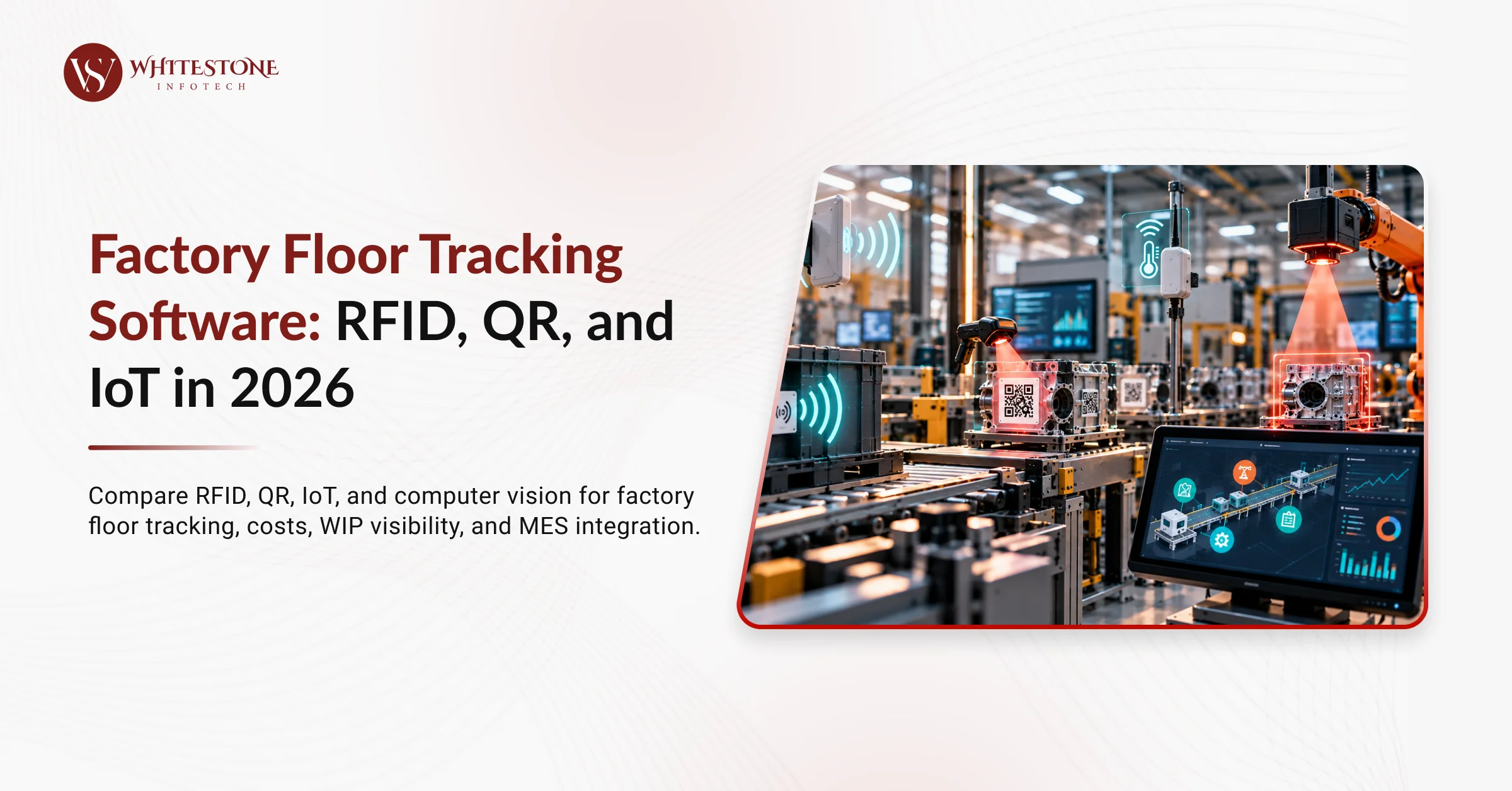
A UK contract manufacturer we spoke to last quarter had been sold a full RFID deployment at £220k plus £48k annual maintenance for tracking work-in-progress across a 4-line production floor. Fifteen months into deployment, the RFID system was tracking pallets and reusable totes reliably but was struggling on individual work orders because each work order had a paper traveller that RFID tags on the traveller kept getting damaged during shop floor handling. Work order tracking accuracy was 71 percent, and operations manager did not trust the WIP dashboard.
The alternative that would have been the right answer: RFID for the pallet and tote layer (which the deployment did well), QR codes on work order travellers with laminated durable labels for the individual work order layer, plus operator scan events at each work centre. Simpler for individual work orders, tolerant of shop floor handling, higher accuracy.
We reworked the tracking design in 8 weeks. RFID kept for pallets and totes (the layer that was working). Added QR-code work order travellers with a scan station at each work centre entry and exit. WIP tracking accuracy went from 71 percent to 96 percent. Operations manager started trusting the dashboard. Additional cost: £34k for QR scan infrastructure plus £8k custom software work.
The vendor pitch had been "RFID for everything" because the vendor sold RFID hardware. RFID is excellent for the right layer (pallets, totes, reusable containers, high-value assets) but wrong for consumable items and paper documents. QR codes are excellent for the layer RFID is wrong for. Most factory floors need both, plus IoT sensors for environmental monitoring, plus computer vision where line-speed inspection matters.
That is the factory floor tracking software 2026 conversation across UK and US manufacturers. Four practical technologies exist, each with legitimate use cases. Factory floors get sold "one technology for everything" when the right answer is layered technology matched to what each layer needs to track.
This article is a candid guide for UK and US manufacturing operations, quality, and IT leaders scoping factory floor tracking investment. Four technologies. When each wins. Real cost per asset. How to layer them. How they integrate with MES, ERP, and QMS. What we learned building real-time tracking systems that share the technical DNA factory floor tracking requires.
The Four Practical Factory Floor Tracking Technologies in 2026
Technology 1: RFID (Radio Frequency Identification). Passive UHF tags £2-£8 per tag, active tags with battery £15-£80 per tag, fixed gateway readers £600-£3000 per gateway, handheld readers £800-£3000. Reads at distance without line-of-sight. Best for asset tracking on moving containers, pallets, tools, and reusable items where the tag investment amortises over many tracking events.
Technology 2: QR codes and barcodes. Labels £0.02-£0.20 per label, handheld scanners £200-£800, fixed scanners £500-£1500. Requires line-of-sight scanning. Best for work orders, material batches, and consumable items where each unit gets one tracking event before consumption or destruction.
Technology 3: IoT sensors. Wireless temperature, humidity, vibration, pressure, and other environmental sensors £40-£400 per sensor. Gateway infrastructure £500-£3000. Best for environmental monitoring, equipment condition monitoring (see predictive maintenance AI guide), and tracking bulk materials or continuous flow products that cannot be individually tagged.
Technology 4: Computer vision. Camera stations with edge processing £3000-£15000 per station. Best for quality inspection at line speed, non-marking product tracking through automated lines, defect detection with automated response, verification of manual assembly steps.
Per GS1's 2026 industrial identification standards documentation, factory floor tracking increasingly uses layered technology approaches: RFID for reusable and high-value assets, barcodes and QR for consumable and paper-based tracking, sensors for environmental and equipment monitoring, computer vision for inspection and defect detection.
When RFID Is the Right Answer
Choose RFID for a specific tracking layer when at least three apply:
Tracking assets at distance without line-of-sight (moving containers, pallets, tools)
Reusable items where tag investment amortises over many tracking events
High-value assets where tag cost is small percentage of asset value
Simultaneous multi-item reading required (reading all tags on a pallet at once)
Assets moving through fixed reader gates (entry, exit, checkpoints)
Environmental conditions that damage or occlude paper labels
Realistic expectation: tag cost £2-£8 passive, £15-£80 active. Reader infrastructure £600-£3000 per gateway. Deployment 3-6 months for factory-scale RFID. Best for the reusable, high-value, or at-distance tracking layer.
When QR Codes Are the Right Answer
Choose QR codes for a specific tracking layer when at least three apply:
Tracking work orders through production stages
Consumable materials or components where each unit gets one tracking event
Low-cost items where per-unit tag cost matters
Human interaction at scan point is acceptable or desired
Line-of-sight scanning is practical
Print-on-demand label generation from ERP or MES
Realistic expectation: label cost £0.02-£0.20. Handheld scanners £200-£800. Deployment 1-3 months for factory-scale QR. Best for work orders, consumable materials, and paper-based tracking layers.
When IoT Sensors Are the Right Answer
Choose IoT sensors when at least three apply:
Environmental monitoring required (temperature, humidity, vibration, pressure)
Equipment condition monitoring for predictive maintenance
Tracking bulk materials or continuous flow products that cannot be individually tagged
Regulatory or quality requirement for environmental data logging
Cold chain or environmental sensitivity in stored materials
Realistic expectation: sensor cost £40-£400 per sensor plus gateway infrastructure £500-£3000. Deployment 2-4 months. Best for environmental, equipment, and untaggable material tracking.
When Computer Vision Is the Right Answer
Choose computer vision when at least three apply:
Quality inspection required at line speed (faster than human inspection can achieve)
Non-marking product tracking through automated lines
Defect detection with automated response (reject, flag, alert)
Verification of manual assembly steps
Character or code recognition on unmarked or variably-marked products
Product identification without tagging (electronics, molded parts)
Realistic expectation: camera station cost £3000-£15000 including edge processing. Deployment 3-9 months including model training. Best for inspection, defect detection, and non-marking tracking.
Layering Technologies for a Factory Floor
Most manufacturers benefit from combining technologies rather than choosing one. Three common layering patterns.
Pattern 1: RFID for containers, QR for contents. RFID tags on reusable pallets, totes, and containers. QR codes on individual work orders or material batches inside. Container-level tracking via RFID, content-level tracking via QR. Common in mid-to-large manufacturing.
Pattern 2: QR for work orders, IoT for environment, RFID for tools. QR-code work order travellers scan at each work centre. IoT sensors monitor environmental conditions at critical process points. RFID tags on high-value tools track location and usage. Best for regulated manufacturing (pharma, food, medical devices).
Pattern 3: Computer vision for quality, QR for traceability, IoT for equipment. Computer vision inspection stations detect defects at line speed. QR codes on finished units enable end-to-end traceability. IoT sensors on production equipment monitor condition. Best for automotive, aerospace, and precision electronics.
Real 2026 Cost Bands
Deployment scale | Initial cost | Annual ongoing | Timeline |
Small (single line, 200-500 assets) | £30k-£120k | £8k-£30k | 3-6 months |
Mid-market (multi-line single site) | £80k-£350k | £20k-£80k | 6-12 months |
Enterprise (multi-site, high asset count) | £250k-£1.2m+ | £60k-£300k+ | 12-24 months |
Two rules that hold at every scale. Software integration cost typically 30-50 percent of initial deployment; hardware alone does not deliver tracking value without software integration into MES, ERP, and operator interfaces. And ongoing operational cost (label replacement, tag replacement, hardware maintenance, software support) typically 20-30 percent of initial deployment annually; underestimating this creates the second-year budget shock most manufacturers experience.
Integration with MES, ERP, and QMS
Factory floor tracking delivers ROI when data flows into decision systems. Six integration patterns that matter.
Tracking to MES for real-time WIP visibility. Scan events feed MES to show real-time work-in-progress across the factory floor. Operations managers see bottlenecks, delays, and progress in real time.
Tracking to ERP for material and work order status. Scan events update ERP work order status (started, in progress, completed). Materials tracking updates ERP inventory. Reduces manual data entry and improves inventory accuracy.
Tracking to QMS for traceability and audit trail. Every scan event, sensor reading, and inspection result feeds into QMS traceability records. Full genealogy from raw material to finished product. Regulatory requirement in food, pharma, medical devices.
Tracking to operator interfaces for next-action prompts. Scan event triggers next-action prompt on operator interface (next work order, quality check due, material shortage alert). Turns tracking into productivity tool for operators.
Tracking to analytics for OEE and continuous improvement. Scan events and sensor readings feed analytics for OEE calculation, downtime analysis, and continuous improvement projects.
Tracking to customer or supplier systems for end-to-end visibility. Some customer contracts (aerospace primes, automotive tier-1) require real-time or near-real-time production visibility. Tracking data flows to customer systems for visibility.
What We Learned Building Real-Time Tracking Systems
WhiteStone has shipped TrackVid (real-time video quality tracking for ecommerce fulfilment across 4000+ Indian merchants processing millions of tracking events daily) and SiteFlow (construction site tracking with real-time worker and equipment visibility for UK property developer). Both share the technical DNA factory floor tracking requires. Three lessons transfer to any UK or US manufacturer scoping factory floor tracking investment.
Point-of-capture reliability determines tracking data quality. TrackVid works because scan events happen at the packing station where the pack actually occurs, and the capture infrastructure is reliable under production conditions. Same for factory floor tracking: scan stations must be reliable, positioned where the work actually happens, and hardened for shop floor conditions. Retrofit tracking that requires operators to remember to scan retrospectively fails.
Data quality trumps dashboard sophistication. SiteFlow succeeded because underlying tracking data was reliable enough that site managers could act on the dashboards. Same for factory floor tracking: dashboards showing wrong data (from patchy scan compliance, damaged tags, missed reads) are worse than no dashboards because they mislead decisions. Invest in reliable data capture before investing in sophisticated dashboards.
Integration with existing systems is where tracking becomes value. TrackVid integrates with ecommerce platforms, marketplaces, and courier APIs. Same for factory floor tracking: tracking events must flow into MES, ERP, QMS, and operator interfaces to inform decisions. Standalone tracking with a vendor dashboard that no one uses is compliance theatre. Integration into existing decision systems is where tracking delivers ROI.
See our portfolio of shipped work for real-time tracking case studies. For a scoped factory floor tracking conversation, book a manufacturing software call with WhiteStone.
Common Failure Modes
"One technology for everything" scoping. UK contract manufacturer buys £220k RFID deployment for all tracking. Works for pallets and totes, fails on work orders because tags on paper travellers get damaged. WIP accuracy 71 percent. Fix: layered technology matched to what each layer needs to track; RFID for reusable containers, QR for work orders and consumables, sensors for environmental, computer vision for inspection.
Ignoring point-of-capture reliability. Team deploys tracking with scan stations in offices rather than at point-of-work. Operators scan retrospectively from memory. Data quality degrades. Tracking dashboard becomes fiction. Fix: scan stations at point-of-work, ruggedised for shop floor conditions, with clear workflow integration.
Deploying tracking without integration into MES, ERP, QMS. Company deploys standalone tracking system with vendor dashboard. Data does not flow into operational systems. Operations continues using existing paper or basic MES workflow. Fix: MES, ERP, QMS integration is scope requirement for factory floor tracking, not optional.
Underestimating ongoing operational cost. Company budgets for initial deployment only. Discovers ongoing label replacement, tag replacement, hardware maintenance, and software support costs 20-30 percent of initial deployment annually. Fix: budget ongoing operational cost from day one.
Frequently Asked Questions
What is factory floor tracking software and what does it do in 2026?
Factory floor tracking software captures the location, status, and movement of work orders, materials, tools, and equipment across the production floor using RFID tags, QR codes, IoT sensors, or computer vision. In 2026 it feeds data into MES for real-time work-in-progress visibility, ERP for material and work order status, QMS for traceability, and operator interfaces for next-action prompts. Delivers value when data flows into decision systems that inform operations.
What is the difference between RFID, QR code, and IoT sensor tracking on the factory floor?
RFID (passive UHF £2-£8 per tag, active £15-£80) tracks assets at distance without line-of-sight, best for reusable containers, pallets, tools. QR codes (£0.02-£0.20 per label) require line-of-sight scanning, best for work orders and consumable materials. IoT sensors (£40-£400 per sensor) monitor environmental conditions and equipment, best for temperature, humidity, vibration, pressure monitoring. Most factories layer all three plus computer vision for inspection.
How much does factory floor tracking software cost in 2026?
Small deployment (single line, 200-500 assets): £30k-£120k initial plus £8k-£30k annually. Mid-market (multi-line single site): £80k-£350k initial plus £20k-£80k annually. Enterprise (multi-site, high asset count): £250k-£1.2m+ initial plus £60k-£300k+ annually. Software integration cost typically 30-50 percent of initial deployment. Ongoing operational cost typically 20-30 percent of initial deployment annually.
Which factory floor tracking technology should a manufacturer choose?
Most benefit from layered technology: RFID for reusable containers, pallets, and high-value tools; QR codes for work orders, material batches, and consumables; IoT sensors for environmental and equipment monitoring; computer vision for inspection and defect detection. Choose based on what each tracking layer needs. RFID for at-distance and reusable, QR for consumable and work-order, IoT for environmental, computer vision for inspection and non-marking tracking.
How does factory floor tracking integrate with MES, ERP, and QMS?
Six integration patterns: tracking to MES for real-time WIP visibility, tracking to ERP for material and work order status, tracking to QMS for traceability and audit trail, tracking to operator interfaces for next-action prompts, tracking to analytics for OEE and continuous improvement, tracking to customer or supplier systems for end-to-end visibility. Integration is where tracking becomes value; standalone tracking with vendor dashboard that no one uses is compliance theatre.
What is the ROI of factory floor tracking software for manufacturers?
Real-time WIP visibility reduces production planning surprises 30-50 percent. Inventory accuracy improvement 15-30 percent through reduced manual data entry errors. OEE improvement 5-15 percentage points through better bottleneck identification. Traceability improvement supports regulatory compliance and reduces recall scope when issues occur. ROI depends on tracking data flowing into decision systems; standalone tracking dashboards that no one acts on deliver compliance theatre rather than ROI.
Why choose WhiteStone Infotech for factory floor tracking software?
We build real-time tracking systems that share factory floor tracking DNA. TrackVid processes millions of tracking events daily for 4000+ Indian ecommerce merchants with reliable point-of-capture and dashboards operations teams trust. SiteFlow tracks construction site operations with real-time worker and equipment visibility for UK property developer. Both required the technical discipline factory floor tracking requires: reliable data capture at point-of-work, resilient processing under load, integration with existing decision systems. Contact WhiteStone Infotech at whitestoneinfotech.com/contact.
The One Thing to Remember
Factory floor tracking software in 2026 uses four practical technologies, each best for a specific tracking layer. RFID (£2-£8 passive, £15-£80 active per tag) for reusable containers, pallets, and high-value tools. QR codes (£0.02-£0.20 per label) for work orders, consumable materials, and paper-based tracking. IoT sensors (£40-£400 per sensor) for environmental and equipment monitoring. Computer vision (£3000-£15000 per camera station) for inspection, defect detection, and non-marking tracking. Most factory floors need layered technology, not one technology for everything. Cost: £30k-£120k for small deployment, £80k-£350k mid-market, £250k-£1.2m+ enterprise. The single decision that determines ROI: does the tracking data flow into MES, ERP, QMS, and operator interfaces to inform decisions, or does it sit in a tracking dashboard that no one acts on? Integration into existing decision systems matters more than tracking technology choice.


.webp)