A UK D2C brand we spoke to last month was losing 4 percent of gross revenue to false "item not received" and "wrong item" claims across Amazon UK, eBay, and their Shopify store. Their support team of six spent half its time on claim disputes with no evidence to present. They had DVR CCTV in the warehouse but no way to link footage to specific orders. When a marketplace opened a dispute at 48-hour SLA, the ops manager scrolled through hours of tape and lost most cases by default.
That is the video proof conversation across UK, US, and Indian D2C brands and marketplace sellers in 2026. Return fraud runs at 3 to 6 percent of revenue across mature D2C markets, per Statista ecommerce fraud data, and marketplace refund flows now favour the buyer by default. CCTV does not close the gap because dispute portals reject unindexed footage. Order-linked packing video does, and the maths on payback is one of the strongest in ecommerce ops today.
This article is a candid guide for founders, ops directors, and CFOs scoping a video proof platform. Why CCTV is not video proof. How the platform actually works. Real cost bands and ROI. What we learned building TrackVid. Written from the position of the team that built one.
Why Generic CCTV is Not Video Proof for Ecommerce
CCTV produces a stream. A dispute portal expects an event.
When a support agent gets a claim ticket asking "prove you packed the correct item on Order 8843", they need the specific clip on screen within two minutes. Not "somewhere in yesterday's footage between 3 pm and 5 pm". Marketplace dispute portals reject raw CCTV because it is not order-linked, not independently verifiable, and not timestamped against their own dispatch data.
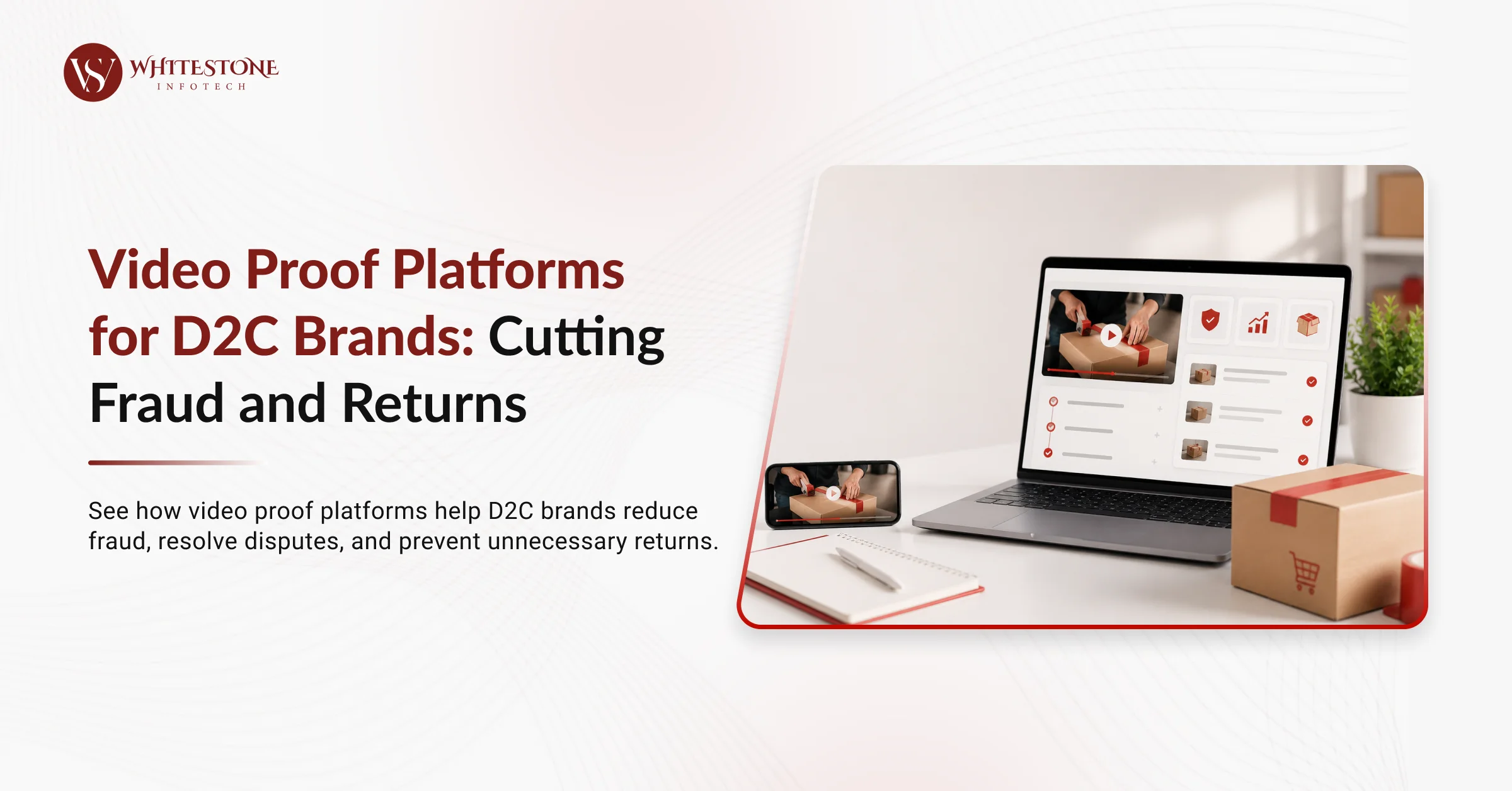
A video proof platform for ecommerce closes this gap by design. Every packing event triggers a recording. The recording is stamped with the Order ID, SKU, AWB, and operator identity at packing time. The video is stored, indexed, and retrievable by any of those fields. This is what dispute portals accept.
The distinction is the data model, not the video quality. CCTV can be 4K and still be worthless. A 720p order-linked clip wins the dispute.
How a Video Proof Platform for Ecommerce Works End-to-End
Five components sit inside every credible platform.
Camera integration. Works with existing CCTV cameras, IP cameras, or webcams already at packing stations. Anything requiring new dedicated cameras is a red flag.
Trigger detection. Recording starts on a barcode scan or WMS event at the packing station, not on continuous capture. This makes retrieval possible and storage cost manageable.
Order-linked indexing. Every video segment is written with metadata: Order ID, SKU, AWB, timestamp, packer identity, warehouse location. A search by Order ID returns the right clip in under two minutes. This is the hard part.
Marketplace connectors. Automated retrieval and response when Amazon, Flipkart, Meesho, AJIO, Nykaa, or Snapdeal open a dispute. For UK and US sellers, the equivalent is Amazon Marketplace, eBay, Etsy, and Shopify or BigCommerce D2C dispute flows.
Retention and encryption. Video is stored encrypted, retained per marketplace and legal requirement (90 to 180 days minimum), and purged automatically after the window.
The technical work is item three. Recording video is trivial. Making that video retrievable and defensible is where every platform lives or dies.
Video Proof Platform for Ecommerce vs CCTV: What the Marketplaces Accept
Question | Raw CCTV | Order-linked platform |
Order-linked? | No | Yes, per packing event |
Retrieval on Order ID | 20 to 60 minutes | Under 2 minutes |
Amazon dispute portal | Rarely | Yes when order-linked |
Flipkart dispute portal | No | Yes |
Meesho and AJIO | No | Yes; AJIO has automated video flows |
Storage cost per SKU/month | High (continuous) | 10 to 20 percent of CCTV cost |
Setup time | 1 to 4 weeks | 15 to 45 minutes on existing cameras |
Claim win rate on eligible disputes | Under 30 percent | 85 to 95 percent |
Choice between them is not a features question. It is a data-model question. Dispute portals accept events, not streams.
Real 2026 Cost Bands and ROI on a Mid-Market D2C Catalogue
Setup and integration.
SaaS on existing cameras: £2,000-£8,000 setup, £150-£2,000/month by volume
SaaS plus new cameras at 2-4 packing stations: £5,000-£20,000 setup, same monthly range
Custom build: £60,000-£250,000 build, £30,000-£120,000 annual run
ROI benchmark on a £5 million D2C brand.
Assume 3 percent of revenue lost to false claims (conservative; McKinsey returns fraud research puts the range at 3 to 6 percent). That is £150,000 annually. At 85 percent claim win rate on eligible disputes and roughly 60 percent of losses addressable through packing video, recovery is £75,000 to £90,000 annually. On SaaS spend of £6,000 to £30,000 annual, payback is under three months. On a £100,000 custom build, payback is 15 to 18 months.
When SaaS wins vs custom. SaaS wins for merchants under £30 million ARR shipping standard product types across mainstream marketplaces. Custom builds only make sense above £30 million ARR with unusual product categories, data residency constraints, or in-house engineering capability wanting long-term roadmap control.
What We Learned Indexing 1,100 Sellers' Packing Video
WhiteStone built TrackVid, our own B2B SaaS video proof platform, now used by 1,100 plus merchants and a Snapdeal partner. The technical challenge was not recording video. Recording is easy. The hard problem was three-way linkage in real time at packing volume.
Every video segment had to be written with the correct Order ID (from the WMS or marketplace order feed), the correct SKU (from the barcode scan), and the correct AWB (from courier assignment, which happens after packing but must retroactively bind to the same video). All three data points arrive from different systems on different clocks. Get one wrong on a large seller and the platform hands the wrong clip to a dispute portal. That is worse than no platform because it is an evidenced admission of fault on the wrong order.
The solution was a message-oriented architecture: the packing event is captured with SKU and timestamp; AWB and Order ID bind asynchronously through a persistent queue; a reconciliation service verifies all three match before the clip is marked "dispute-ready". A search by Order ID returns only reconciled clips.
The lesson: any platform that promises "instant retrieval" without explaining reconciliation is fragile. Ask the vendor to walk through it. You can see our shipped work at our portfolio. If you want a candid conversation about your marketplace mix, book a video proof platform call with WhiteStone.
Common Failure Modes
Three failure modes we see repeatedly.
Buying on video quality, not indexing. Team picks the platform with 4K cameras over the one with cleaner reconciliation. Loses disputes because clips are unmatched. Video quality never won a marketplace dispute; order-linking does.
Under-scoping retention. Team sets 30-day retention because storage is expensive. AJIO disputes arrive at 90 days. Clips are gone. Set retention per marketplace SLA, not per storage preference.
Skipping the reconciliation walkthrough. Vendor promises "instant retrieval" without explaining how WMS, barcode, and courier data reconcile. Six months in, 1 in 500 clips is misidentified. Marketplace suspends the seller for evidenced fault on wrong orders.
Frequently Asked Questions
How much does video proof cut return fraud?
Well-implemented platforms cut addressable return fraud by 60 to 80 percent, with reported claim win rates on eligible disputes above 90 percent. For a £5 million D2C brand losing 3 percent of revenue to false claims, that recovers £75,000 to £90,000 annually. SaaS payback is under three months; custom build payback is 15 to 18 months.
How do you link a packing video to an Order ID reliably?
Three-way reconciliation between the WMS or marketplace order feed (Order ID), barcode scan at packing station (SKU and timestamp), and courier system (AWB). Message-oriented architecture with a persistent queue and reconciliation service verifies all three before the clip is marked available. Any vendor that cannot describe this reconciliation will misidentify clips at scale.
How long does packing video need to be retained?
Between 90 and 180 days is standard for most marketplaces. AJIO and Amazon dispute windows typically require 180 days. UK GDPR and India DPDP require automatic purge after the retention window. Set retention per marketplace, not per storage budget.
Is packing video accepted by Amazon, Flipkart, and Meesho?
Yes, when video is order-linked and delivered through the marketplace dispute portal within the response window. Raw CCTV is rejected because it is not order-linked or independently verifiable. AJIO has automated CCTV video request flows that expect order-linked evidence; platforms with automated AJIO connectors return the correct clip without a human step.
Video proof platform vs CCTV: what do the marketplaces actually accept?
Marketplaces accept order-linked packing video. They reject raw CCTV. The difference is data model, not video quality. A CCTV feed is a continuous stream; an event-model platform produces indexed clips tied to specific Order IDs, SKUs, and AWBs.
The One Thing to Remember
A video proof platform for ecommerce is not CCTV plus indexing on top. It is a different architecture built around order-linked events that dispute portals accept as evidence. For most D2C brands under £30 million ARR, SaaS wins on total cost of ownership with payback under three months. Custom builds are defensible only above that scale with unusual product mix or data residency. Whichever path you choose, ask the vendor to walk through the WMS-marketplace-courier reconciliation. If they cannot, the platform will fail at scale.