A UK enterprise CTO we spoke to last month runs a £400m business on 47 SaaS tools plus a legacy ERP. Six years of point-to-point integrations built by different teams. Every business change (new region, new product, new compliance rule) took his team 4 to 6 weeks to propagate because no integration shared standards. His finance team was reconciling data across tools manually every month. He had a Boomi quote at £220k annual and three internal proposals for a custom build ranging from £600k to £2.1m.
That is the "how to build an integration platform in-house" conversation across UK and US enterprises in 2026. iPaaS vendors promise silver bullets; internal engineering teams promise long-term control. Neither is right by default. The answer is a set of six specific decisions that determine whether your integration surface ships or breaks in production.
This article is a candid guide for CTOs, Enterprise Architects, and Heads of Platform. Why 30+ tools do not talk. The six decisions. When custom in-house actually wins. Patterns that ship. Real cost bands. What we learned integrating AI into a consumer product.
Why 30+ SaaS Tools Do Not Talk to Each Other by Default
Every SaaS tool was built by a different vendor at a different time. Each ships its own API standards.
Different authentication: OAuth 2.0, API keys, JWT, mTLS, some still using Basic Auth. Different rate limits: 100 requests per minute for some, 10,000 per second for others. Different retry semantics: exponential backoff for some, none for others. Different error codes for the same conditions. Different data models: "customer" is one object here, three objects there, tied to "contact" or "account" depending on the vendor.
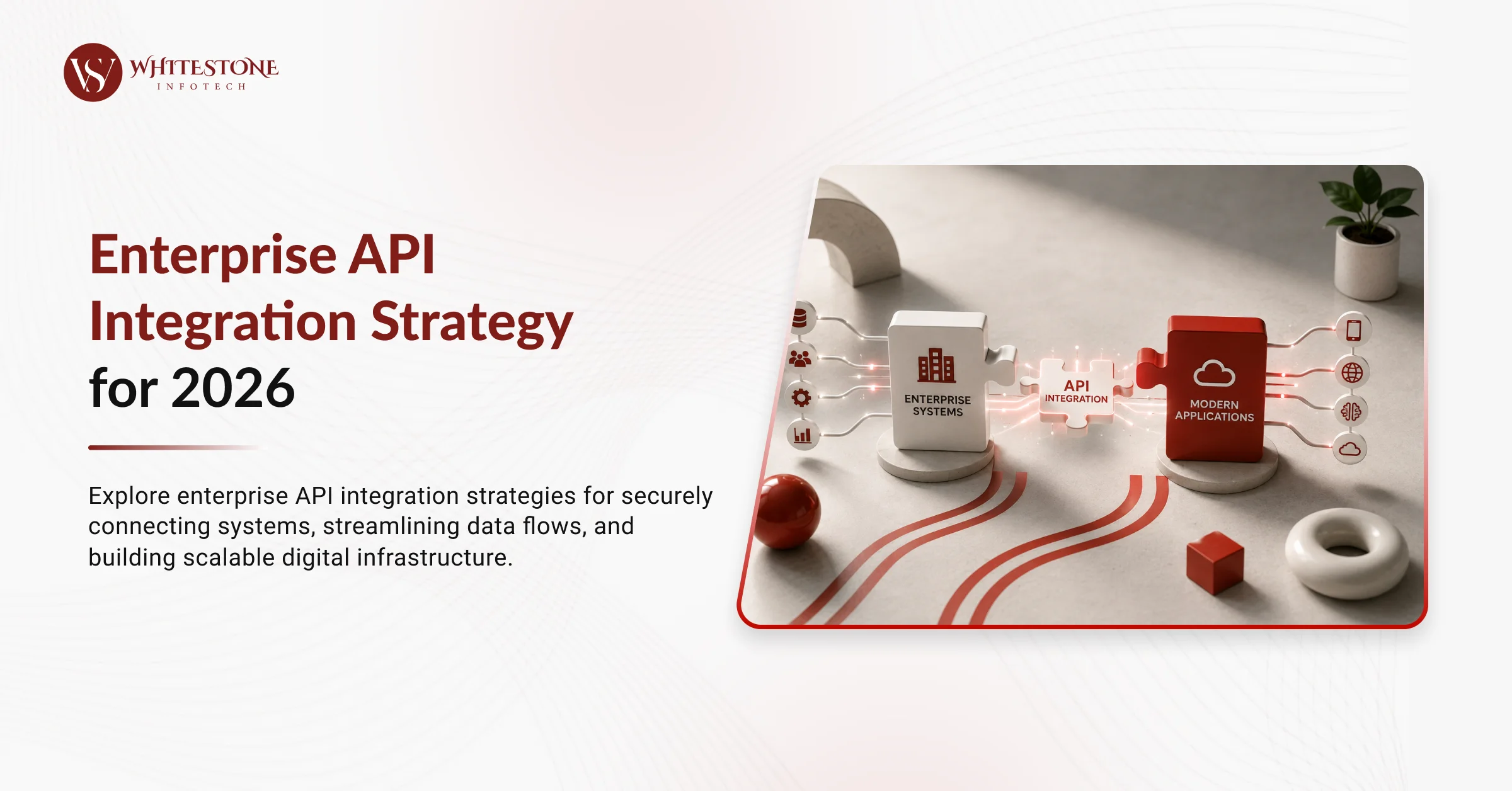
Layer 30 to 100 of these on top of each other with no shared identity, no shared data catalogue, and no shared observability, and you get the estate most enterprises are running. The fix is not choosing a "better" tool. It is putting a layer in front that normalises differences, gives you one place to observe every integration, and lets you version and roll back changes safely. That layer is either iPaaS, custom in-house, or hybrid.
The Six Decisions in Every Custom Integration Platform
1. iPaaS vs custom platform vs hybrid. The biggest decision. Determines cost band, team shape, and 3-year roadmap.
2. Sync vs async as default. Request-response is simpler but couples systems tightly. Event-driven is more work up front but decouples systems and handles failure gracefully. Modern enterprise defaults to event-driven for anything above 10 requests per second sustained.
3. Point-to-point vs hub-and-spoke. Point-to-point works below 10 integrations; falls over above 30. Hub-and-spoke (iPaaS or custom hub) is the pattern above that scale. Do not build point-to-point in 2026 unless you know the estate will stay small.
4. API versioning strategy. Semantic versioning in the URL path (v1, v2) is the pragmatic default. Header-based versioning is theoretically cleaner but harder to debug. Never use "current version" or unversioned APIs in enterprise, ever.
5. Rate-limiting strategy. Client-side (each caller respects a limit), gateway (central enforcement), or both. Enterprises above 30 integrations need both. Gateway alone lets a bad client take down the platform; client-side alone lets vendors flag you.
6. Where authentication and secrets live. Central vault (HashiCorp Vault, AWS Secrets Manager, Azure Key Vault) or distributed per service. Central wins for auditability and rotation. Distributed only defensible for extreme regulatory constraints.
Custom In-House vs iPaaS: When Building Actually Wins
Option | Best for | Rough cost | Team shape |
iPaaS (MuleSoft, Boomi, Workato) | Under 100 integrations, standard SaaS-to-SaaS, business-user recipes | £30k-£300k+ annual licence | 3-5 platform engineers |
Custom integration platform | Above 500 integrations, unusual protocols, data residency, in-house platform team | £200k-£2m build plus £150k-£800k annual run | 8-20 engineers |
Hybrid (iPaaS + custom) | Above £100m revenue enterprise: iPaaS for business flows, custom for high-volume core | £150k-£800k annual all-in | 5-12 engineers |
Point-to-point (legacy) | Under 10 integrations, small business | Development cost only | 1-2 engineers |
Vendor picks in iPaaS by tier. MuleSoft (Salesforce): enterprise-heavy, expensive, governance-strong. Boomi: mid-market to enterprise, good UX. Workato: modern, recipe-based, strong for finance and HR. Celigo, Tray, Prismatic: mid-market strong. Zapier and Make: SMB only, not enterprise.
Per MuleSoft integration research, enterprises with 100+ integrations save 30 to 50 percent on total cost of ownership by centralising on iPaaS or a custom hub versus continuing point-to-point. The Gartner iPaaS Magic Quadrant tracks vendor positioning annually.
When custom in-house is the right answer. Above 500 integrations where per-integration iPaaS pricing eats the budget. Unusual protocols (industrial control, proprietary EDI variants, real-time trading feeds) that iPaaS connectors do not cover. Data residency requirements that rule out US-hosted iPaaS. In-house platform engineering team that can own and evolve the surface long-term. The integration layer itself as a competitive differentiator (rare but real in some industries).
The Patterns That Ship: Versioning, Rate Limits, Idempotency
Five patterns that separate a platform that ships from one that keeps breaking.
Semantic versioning in URL path. /v1/customers and /v2/customers co-exist. Never break v1 without 12 months' notice. Never introduce breaking changes inside a version.
Circuit breakers on every outbound call. When a downstream service starts failing, the circuit opens after N failures and fails fast for T seconds. Prevents cascading failure. Use resilience4j (JVM), Polly (.NET), or built-in equivalents in Go and Rust.
Idempotency keys on every write. Client generates a UUID with each write and includes it in the request header. Server dedupes by key for 24 hours. Retries are safe; duplicates are impossible. Non-negotiable for financial and inventory integrations.
Dead letter queues for async messages. Any message that cannot be processed after N retries lands in a DLQ. Ops team gets alerted; message preserved for manual replay. Without this, silent data loss is inevitable in event-driven systems.
Distributed tracing (OpenTelemetry). Every request carries a trace ID that propagates through every downstream call. Debugging goes from "which service is failing?" to "here is the exact call that failed". OpenTelemetry became the de facto standard in 2025-2026.
Real 2026 Cost Bands and Team Shape
Cost anchor for a UK enterprise with 60 integrations.
iPaaS-only (Boomi or Workato): £120k-£350k annual
iPaaS plus modest customisation: £250k-£600k annual
Hybrid (iPaaS + custom hub for 5-10 core integrations): £400k-£1.2m annual
Fully custom platform: £600k-£2m annual
Team shape. iPaaS operations: 3 to 5 platform engineers plus a lead architect. Custom platform: 8 to 20 engineers. Hybrid: 5 to 12 engineers.
Hidden costs. Data catalogue and schema management (£30k-£200k annual). Vendor SDK maintenance (£20k-£150k annual). Observability platform such as DataDog, New Relic, or Grafana Cloud (£30k-£300k annual). Budget for these explicitly or they eat the platform budget within 18 months.
What We Learned Integrating AI Into a Consumer Product
WhiteStone built FlexiVision, our AI tile visualisation product. The lesson relevant to enterprise API integration is about reconciling three systems on three clocks.
FlexiVision takes a customer photo, sends it to a learned segmentation model that identifies floor and wall areas, then feeds those masks into a 3D tile rendering engine. Three separate systems, each with its own latency, retry semantics, and failure modes. The first version ran them synchronously and fell over when inference latency spiked (which it does whenever the model is retrained).
The rebuild was event-driven with idempotency keys and a dead letter queue. Photo upload triggers a job. Inference runs asynchronously. Render runs when inference completes. Every step is idempotent, retries safely, and lands in DLQ if it fails. Reliability moved from 92 percent to 99.7 percent.
The enterprise integration parallel is exact. Whether integrating a consumer photo pipeline or a 47-tool SaaS estate, the same patterns apply. See our portfolio of shipped work. For a scoped integration audit, book an integration audit with WhiteStone.
Common Failure Modes
Choosing the platform before running the audit. Team commits to MuleSoft because a peer uses it, then finds the estate is 90 percent event-driven where Workato would have shipped faster. Or worse, commits to custom in-house without the team size to run it. Audit first.
Skipping the observability layer. Team ships iPaaS or custom without distributed tracing. First outage takes 6 hours to diagnose. Ops blames the vendor; problem was actually a schema drift in a downstream system. Build tracing from day one.
Point-to-point above 30 integrations. Team adds "just one more" point-to-point integration for 3 years. Estate hits 60. Any change touches 15 systems. Migration to hub-and-spoke now costs 5x what it would have at 20 integrations.
Frequently Asked Questions
iPaaS vs custom integration platform: which wins?
iPaaS wins under 100 integrations with standard SaaS-to-SaaS flows and business users maintaining recipes. Custom wins for unusual protocols, data residency, above 500 integrations, extreme volume, or an in-house platform team. Most enterprises above £100m revenue end up hybrid: iPaaS for business flows, custom for high-volume core integrations.
How do you version enterprise APIs?
Semantic versioning in the URL path (v1, v2) is the pragmatic default. Header-based versioning is theoretically cleaner but harder to debug. Never use "current version" or unversioned APIs. Never break v1 without 12 months' notice.
How do you handle rate limits across 30+ integrations?
Both client-side (each caller respects a per-service limit) and gateway (central enforcement). Gateway alone lets a bad client take down the platform; client-side alone lets vendors flag you.
What is the cost of an enterprise integration platform in 2026?
iPaaS-only £30k-£300k+ annual licence. Custom build £200k-£2m plus £150k-£800k annual run. Hybrid £400k-£1.2m annual. Add £80k-£650k for observability, data catalogue, and vendor SDK maintenance. Team shape 3 to 20 engineers depending on approach.
Where should authentication and secrets live?
Central vault (HashiCorp Vault, AWS Secrets Manager, Azure Key Vault) for auditability and rotation. Distributed per-service only defensible for extreme regulatory constraints. Never in code, config files, or environment variables committed to the repo.
When does custom in-house build beat iPaaS?
Above 500 integrations where per-integration iPaaS pricing eats the budget. Unusual protocols (industrial control, proprietary EDI, real-time trading) iPaaS connectors do not cover. Strict data residency ruling out US-hosted iPaaS. In-house platform engineering team of 8+ engineers that can own and evolve the surface long-term.
Why choose WhiteStone Infotech for enterprise API integration?
We ship our own AI products in production and have delivered 50+ projects for clients across the UK, US, and Europe. Every integration engagement starts with the audit against the six decisions, then a vendor-neutral recommendation on iPaaS vs custom vs hybrid. We build the platform, not just the strategy paper. Contact WhiteStone Infotech at whitestoneinfotech.com/contact.
The One Thing to Remember
How to build an integration platform in-house in 2026 is answered by six decisions, not by a vendor pitch. iPaaS wins under 100 integrations with standard SaaS-to-SaaS flows. Custom in-house wins for unusual protocols, extreme volume, or data residency. Hybrid is the enterprise default above £100m revenue. Ship the five patterns that matter (semantic versioning, circuit breakers, idempotency, DLQ, distributed tracing) or the platform will break in production regardless of the vendor.