A UK D2C brand we spoke to last month had a CX team of 12 handling 8,000 tickets monthly, average handle time 12 minutes, fully-loaded cost per ticket £30. Their CX Director had a mandate to cut cost per contact 30 percent while raising CSAT. A vendor had pitched 65 percent ticket deflection with agentic AI. Her question was whether that number was real or a slide-deck number that would collapse in production.
That is the AI customer support conversation across UK and US CX teams in 2026. Agentic AI has genuinely changed what is possible. RAG over knowledge base plus tool-calling means AI can resolve tickets end-to-end. But vendor deflection claims are measured on ideal conditions; production numbers are usually half. Safety design (refund caps, confidence thresholds, audit trails) is the difference between cost savings and a viral incident.
This article is a candid guide for CX Directors, COOs, and Heads of Support. What changed between chatbots and agentic AI. Realistic deflection rates. Vendor comparison. Cost bands. Safety design.
What Changed Between Chatbots and Agentic AI Support
Two generations of technology often conflated.
Old chatbots (2018-2022). Decision-tree architecture with keyword matching and predefined flows. Answered "where is my order" if the phrasing matched; failed on paraphrase, ambiguity, or multi-step questions. Deflection rates 10-25 percent on best-designed deployments; typically 5-15 percent.
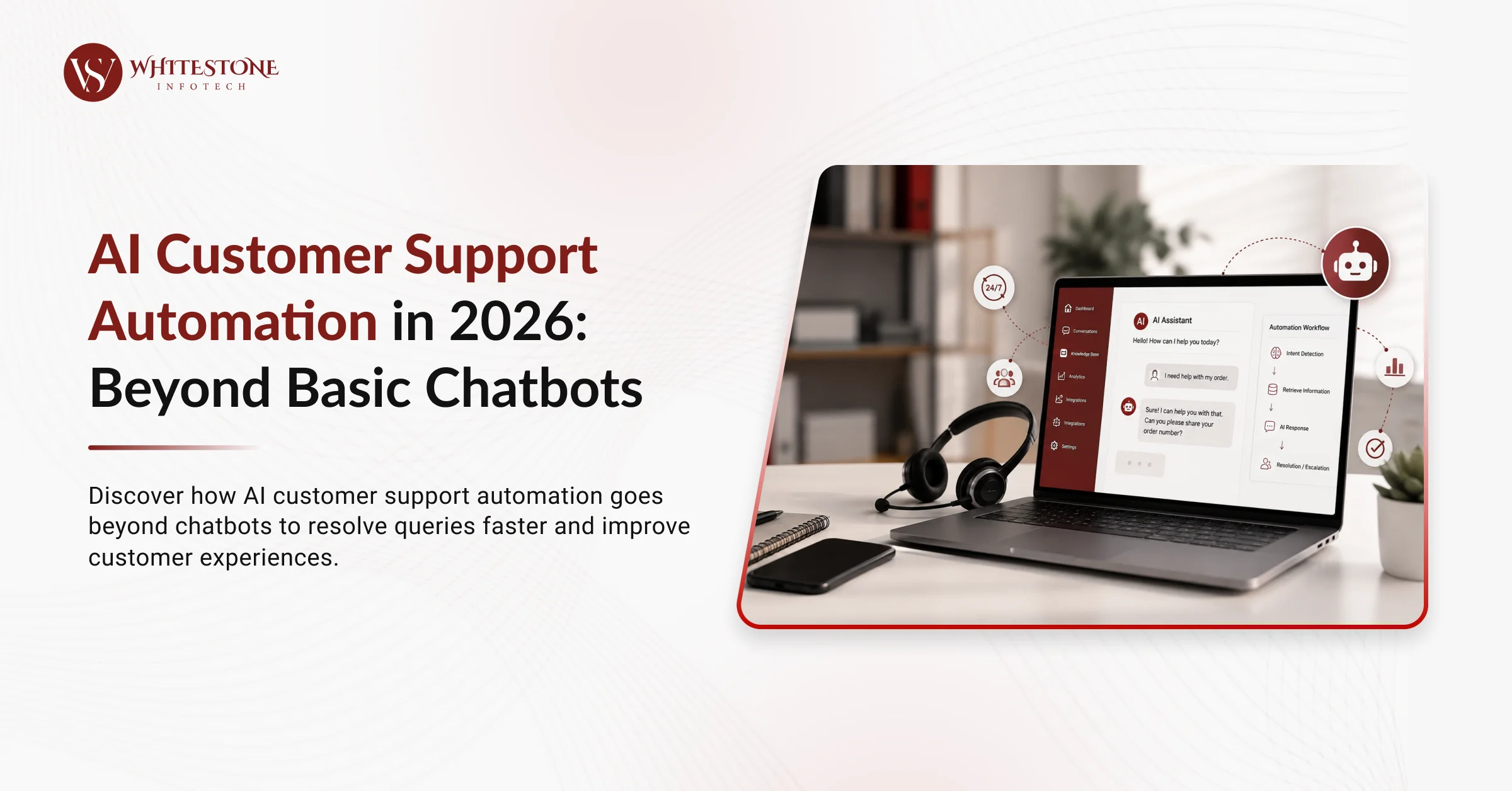
Agentic AI (2024-2026). RAG (retrieval augmented generation) over knowledge base plus tool-calling architecture. Understands paraphrased questions, holds conversation context, calls tools to look up orders, issue refunds within limits, update account details, or escalate to human with full ticket context. Deflection rates 20-45 percent in production; higher on well-structured workflows.
The shift. From "answer FAQ" to "resolve ticket." Old chatbot on "my parcel says delivered but I did not receive it" gave a link to policy. Agentic AI on the same query looks up the order, checks the courier's tracking, applies the "lost parcel" policy, issues a replacement or refund within limits, and confirms to the customer. Same input, different outcome.
What did not change. Complex emotional queries (bereavement, dispute, distressed customer) should still route to a human first. AI is genuinely good at transactional resolution; genuinely limited on emotional intelligence. Design accordingly.
The Zendesk CX Trends 2026 report frames this as the "contextual intelligence" shift and reports 83 percent of CX leaders now consider memory-rich AI a personalisation priority. The productivity gap between teams using agentic AI and teams still on old chatbots is widening in 2026.
Realistic Deflection Rates in 2026 (Not Vendor Claims)
Vendor claims vs production reality.
Vendor claims. 50-80 percent ticket deflection with agentic AI. Marketing material and demo environments.
Production reality. 20-45 percent deflection for typical B2C support operation with good knowledge base. 10-25 percent for teams with poor knowledge base or unusual ticket mix.
Deflection by ticket type.
Informational queries (product info, policies, hours): 60-80 percent deflection
Simple account queries (order status, invoice request): 40-60 percent deflection
Transactional actions (refund, cancellation, account change): 20-40 percent deflection
Complex disputes, technical problems, emotional queries: 5-20 percent (and often should stay lower for CSAT)
What drives real deflection. Knowledge base quality is the biggest factor. Teams with structured, current, comprehensive knowledge see the top of the range. Teams with scattered, outdated, or thin content see the bottom regardless of vendor.
What breaks deflection numbers. Old policies still in the knowledge base. Undocumented workflows agents actually use. Fragmented content across multiple systems. Fix these before evaluating AI; deflection rates depend more on your content than on the AI.
Zendesk AI vs Intercom Fin vs Custom
Four viable options in the 2026 landscape.
Zendesk AI (Answer Bot Advanced plus AI Copilot). Mature RAG plus agent-assist capability. £30-£120 per agent/month for AI features on top of £55-£249 per agent for the platform. Best for teams already on Zendesk wanting to add AI to existing workflow.
Intercom Fin. Pay-per-resolution model at £29-£99 per resolved conversation. Strong RAG plus tool-calling. Best for chat-heavy operations where resolution pricing aligns with value delivered.
Salesforce Einstein for Service. Enterprise CX AI integrated into Service Cloud. £75-£300 per user/month depending on tier. Best for enterprise teams already on Salesforce.
Custom builds (LLM plus RAG plus tool-calling). £120k-£500k build plus £50k-£200k annual run cost. Defensible for unusual workflow, 50,000 plus tickets monthly where per-resolution pricing exceeds custom TCO, or teams requiring full control over model choice and data residency.
Gartner customer service AI research publishes ongoing analysis of the CX AI vendor landscape; most enterprise CX teams evaluating options work through Gartner reports before shortlisting.
Real 2026 Cost Bands
Per-ticket economics. For a team handling 10,000 tickets monthly at £25 cost per ticket:
Zendesk AI at 30 percent deflection: saves £75k annually (net of AI subscription)
Intercom Fin at 30 percent deflection: pay £29-£99 per resolution on 3,000 deflected; net £30-£150k annual savings
Custom build at 40 percent deflection: £250k build, £120k annual run, saves £120k in year 1, £180k annually thereafter
Build vs buy break-even. Cloud vendor (Zendesk, Intercom) wins for teams up to 30,000 tickets monthly. Custom becomes defensible above 50,000 tickets monthly with unusual requirements.
Hidden costs. Knowledge base cleanup (£10k-£50k). Integration (£15k-£80k). Agent training and change management (£5k-£30k). Include these in the business case.
Keeping AI Safe on Refunds and Account Actions
Five controls that separate safe deployments from viral incidents.
Hard limits on autonomous actions. Refund amount capped (e.g. maximum £50 auto-approved). No account changes without human review. No policy exceptions. Refund rate limited per hour to prevent runaway automation.
Confidence thresholds. Every AI action returns a confidence score. Above threshold: auto-execute. Below threshold: escalate to human with recommendation. Threshold tuned to risk.
Full audit trail. Every AI-taken action logged with reasoning, confidence score, and outcome. Enables post-hoc review and dispute resolution.
Human review workflow. Anything above defined risk threshold routes to human before execution. Correction feeds model improvement.
Rate limiting and circuit breakers. If AI issues more than N refunds per hour or approves more than N policy exceptions per day, automation pauses and alerts a supervisor. Prevents runaway incidents from bugs or prompt injection.
Human-first required for. Bereavement, distress, formal complaints, chargeback disputes, VIP customers, anything involving loss of life or major financial impact. AI can prepare context for the human agent but should not execute autonomously.
What We See Across Deployments
Three patterns recur across our engagements.
Knowledge base quality determines deflection more than vendor choice. Teams spending 30 percent of AI budget on content cleanup see 2-3x deflection over teams that skip it. Content quality is the single biggest lever.
Hybrid deployments beat pure AI-first. Teams that route by ticket type (informational to AI, complex to human, transactional with confidence-based routing) outperform teams that put AI in front of every ticket.
Cloud vendor wins for most; custom for unusual scale. Under 30,000 tickets monthly, Zendesk AI or Intercom Fin cover the requirement cost-effectively. Custom pays back only at scale with unusual workflow.
We built TrackVid, a video proof and claim management platform used by ecommerce sellers on both cloud vendor and custom CX AI stacks. The pattern is consistent: confidence-based routing beats fully automated or fully manual on both cost and CSAT.
You can see our shipped work at our portfolio. If you want a candid conversation about your CX AI decision, book a CX AI call with WhiteStone.
Common Failure Modes
Chasing vendor deflection claims. Team commits to 65 percent deflection target based on vendor pitch. Reality is 30-40 percent. Project labelled a failure despite significant productivity gain.
Deploying without knowledge base cleanup. AI trained on outdated policies gives customers wrong answers. CSAT tanks. Pull back and rebuild content first.
Skipping safety controls to hit deflection target. Team removes confidence thresholds and human review to push deflection higher. First refund incident makes the news. Reinstate all controls immediately.
Frequently Asked Questions
How much ticket deflection is realistic in 2026?
20-45 percent for typical B2C support with good knowledge base. Best on informational queries (60-80 percent), lower on transactional actions (20-40 percent), lowest on complex or emotional queries (5-20 percent, often should stay lower for CSAT). Vendor claims of 50-80 percent are ideal-condition numbers that rarely hold in production.
Zendesk AI, Intercom Fin, or custom?
Zendesk AI (£30-£120 per agent/month) for teams already on Zendesk. Intercom Fin (£29-£99 per resolution) for chat-heavy operations wanting pay-per-outcome pricing. Custom (£120k-£500k build) for 50,000 plus tickets monthly or unusual workflow. Most mid-market teams should validate with cloud vendor before considering custom.
How do you keep AI safe on refunds and account actions?
Five controls: hard limits on autonomous actions (refund cap, no account changes), confidence thresholds for auto vs escalation, full audit trail, human review workflow for anything above risk threshold, rate limiting and circuit breakers. Skip any and you risk a viral incident.
What is agentic AI vs traditional chatbot?
Old chatbots used decision trees and keyword matching; deflection 5-15 percent. Agentic AI (2024-2026) uses RAG over knowledge base plus tool-calling to resolve tickets end-to-end; deflection 20-45 percent. The shift is from "answer FAQ" to "resolve ticket," including looking up orders, issuing refunds, and escalating with context.
How much does AI customer support automation cost in 2026?
Zendesk AI: £30-£120 per agent/month plus £55-£249 platform. Intercom Fin: £29-£99 per resolution. Salesforce Einstein: £75-£300 per user/month. Custom: £120k-£500k build, £50k-£200k annual run. Break-even for custom is around 50,000 tickets monthly with unusual requirements.
The One Thing to Remember
Agentic AI genuinely resolves tickets end-to-end in 2026, not just answers FAQs. Real deflection is 20-45 percent, not vendor-claimed 50-80 percent. Knowledge base quality determines deflection more than vendor choice; invest 30 percent of budget on content cleanup before evaluating AI. Cloud vendors cover most mid-market needs; custom becomes defensible above 50,000 tickets monthly. Safety controls (refund caps, confidence thresholds, audit trails, rate limiting) are non-negotiable.
If you want a candid conversation about your CX AI strategy, browse our AI development services or come to the call.